
Type 2 diabetes remission is possible for some people, but it is not magic. The real foundation is sustained weight loss, lower glucose load, higher protein and fibre, better meal structure, and medical follow-up.
Introduction: the honest version of “diabetes reversal”
“Can diabetes be reversed?” is one of the most powerful questions in Indian health today. It is also one of the easiest questions to answer irresponsibly.
The honest answer is this: many people with type 2 diabetes can significantly improve blood sugar control. Some can reach remission. But remission is not the same as a permanent cure.
A 2021 international consensus report led by major diabetes organizations defined type 2 diabetes remission as HbA1c below the diabetes diagnostic threshold, generally below 6.5%, for at least three months after stopping glucose-lowering medicines. That definition matters because it protects patients from the false belief that diabetes has disappeared forever. Remission means the disease is quiet. It does not mean the underlying metabolic vulnerability has vanished.
This distinction is especially important in India, where diabetes is no longer an urban problem. As per the International Diabetes Federation, the incidence of diabetes in India in 2024 was 89.8 million, which is estimated to increase to 157 million by 2050. Additionally, those with prediabetes numbered 127 million in 2024 and is estimated to go up to 220 million by 2050. The problem is not only sugar in tea. It is a broader metabolic environment: refined carbohydrates, low protein intake, sedentary work, abdominal fat, stress, poor sleep, ultra-processed snacks, and late dinners.
At Nirog Bhumi, our venture that runs integrated diabetes reversal programs, we believe that the right framing is not “one food will cure diabetes.” The better framing is: a structured daily routine can reduce glucose spikes, improve insulin sensitivity, support weight loss, preserve muscle, and help some people move toward remission under supervision.
The place to begin is not with fear. It is with the plate.
1. What remission research teaches us: weight loss matters, but the method must be sustainable
The strongest remission evidence does not come from herbal shortcuts. It comes from structured weight-loss interventions.
The DiRECT trial, published in The Lancet in 2018, tested a primary-care-led weight management programme in people with type 2 diabetes. The intervention used a low-calorie diet of about 800 calories a day for the first 12 weeks, followed by food reintroduction and long-term support. At one year after the initiation of the programme, 46% — nearly one in two — of the people who followed the programme achieved full remission from diabetes. Among those who lost 15 kg or more, remission rate was much higher at 86%. This revealed a key lesson: remission is significantly linked to weight loss.
Real-world evidence from the NHS Type 2 Diabetes Path to Remission Programme has added a practical public-health layer. In a prospective evaluation reported in The Lancet Diabetes & Endocrinology and covered publicly in 2024, about one-third of people who completed the one-year programme and had the required measurements achieved remission, with average weight loss around 15.9 kg among those in remission.
This does not necessarily mean that everyone should start an 800-calorie diet. It means excess body fat, especially around the liver, pancreas, and abdomen, is a central driver in many cases of type 2 diabetes. When that fat burden is reduced, insulin sensitivity and beta-cell function can improve in some people, especially when diabetes is relatively recent.
For Indian patients, this message needs careful translation. Many Indians develop type 2 diabetes at lower BMI than Western populations because of higher abdominal fat, lower muscle mass, and the South Asian metabolic phenotype. So weight alone is not the full story. Waist size, fatty liver risk, triglycerides, blood pressure, activity level, muscle strength, and food quality matter too.
A simple scale number is not enough. The real target is metabolic health.
2. The Indian plate problem: too much fast carbohydrate, too little protein and fibre
The traditional Indian plate was not always unhealthy. Many regional diets were based on millets, pulses, seasonal vegetables, fermented foods, curd and spices. This was accompanied with adequate physical labour. The modern Indian plate though is different.
In many homes and offices, the plate has become heavily carbohydrate-dominant:
- Poha without enough protein
- Paratha with little vegetable or dal
- White rice with potato curry
- Roti plus rice in the same meal
- Tea with sugar and biscuits between meals
- Namkeen, bakery snacks, and sweets as “small bites”
- Fruit juice instead of whole fruit
- Late-night heavy dinners
This pattern creates two problems.
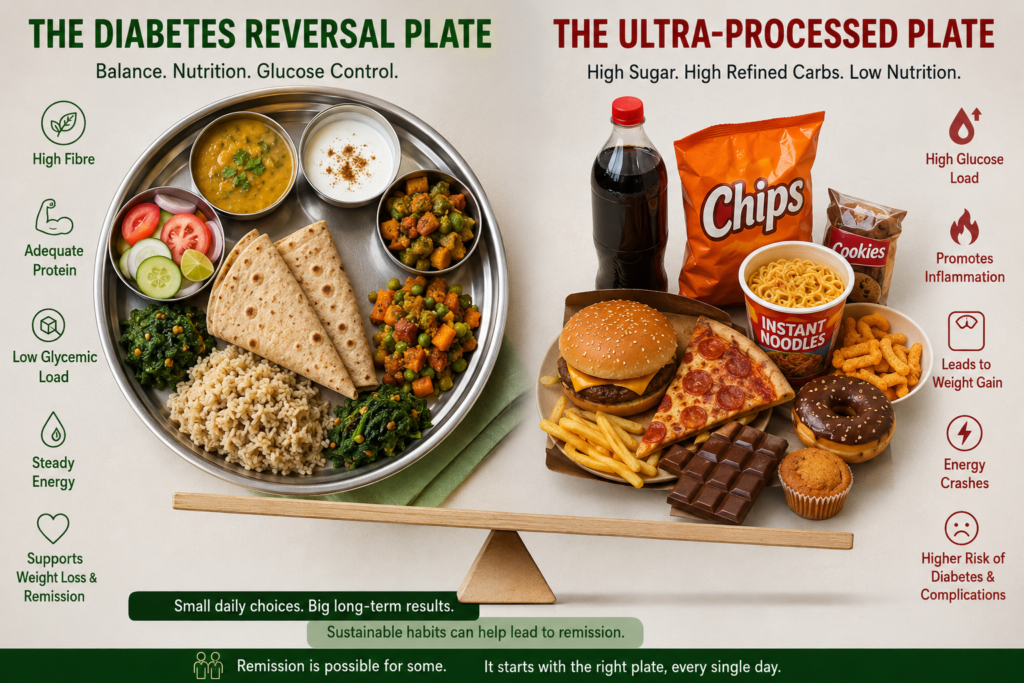
First, the glucose load becomes high. Refined grains and added sugars digest quickly, leading to sharper glucose excursions after meals. Second, protein and fibre remain low, which weakens satiety, muscle maintenance, and glucose stability.
Recent India-focused dietary research from ICMR/NIN and INDIAB-linked work has repeatedly highlighted the role of high refined carbohydrate intake and low protein diversity in metabolic risk. Public reporting on ICMR-led research using INDIAB data has described Indian diets as often dominated by low-quality carbohydrates such as white rice, milled grains, and added sugars, along with low protein intake. The same line of research suggests that replacing a small share of carbohydrate energy with protein from pulses, legumes and dairy may be associated with lower risk of diabetes and prediabetes.
The message is not “carbs are poison.” That is too simplistic.
The better message is: carbohydrate quality, portion, timing, pairing, and total daily energy matter.
A bowl of dalia with vegetables and curd behaves differently from a plate of maida noodles. A small portion of brown rice with dal, sabzi, salad, and curd behaves differently from two large plates of plain white rice. A roti eaten with paneer bhurji and vegetables behaves differently from roti eaten with potato and sweet tea.
Diabetes-friendly eating is not about removing Indian food. It is about rebuilding the Indian plate.
3. The Nirog Bhumi plate framework – The One-fourth formula
For most patients, a safe and practical starting structure is:
- One-fourth plate: salads
- One-fourth plate: non-starchy vegetables
- One-fourth plate: protein (preferably raw and sprouted if one can digest it)
- One-fourth plate: high fibre unrefined carbohydrate
- Add: small amount of healthy fat
- Optional: curd, chaas
This is not a rigid medical prescription. It is a useful behaviour tool.
Salads can include carrots, radish, cucumber, tomatoes, beetroot, along with raw green leafy vegetables. If the digestive system has lost strength, these could be steamed to make them easily digestible.
Vegetables could include lauki, tori, bhindi, cabbage, cauliflower, capsicum, spinach, methi leaves, beans, mushroom, brinjal, and seasonal greens. Both salads and vegetables add fibre, micronutrients, volume, and satiety.
Protein can come from dal, chana, rajma, sprouts, curd, paneer in moderation, tofu, soy chunks, depending on food preference, kidney status, and medical advice. The goal is not body building level protein. The goal is enough protein to reduce hunger, support muscle, and avoid a pure-carb plate.
Controlled carbohydrate can be roti, rice, millet, dalia, oats, idli, dosa, or other staples. The point is portion and pairing. A person does not need to fear grains, but grains should stop dominating the plate. Also, carbs should not be devoid of the fibre that they naturally contain.
Healthy fat can come from nuts, seeds, limited cold-pressed oils, or traditional cooking fats in controlled quantities. Deep-fried snacks and repeated reheated oils are surely not healthy fat.
4. Practical Indian meal upgrades
Breakfast upgrades
Instead of: poha alone
Try: vegetable poha with peanuts plus curd, or add sprouts on the side. Even better, replace the poha with dalia, as poha is refined carbohydrate.
Instead of: bread-butter and sweet tea
Try: besan chilla with paneer/tofu filling and kadha.
Instead of: paratha with pickle only
Try: roti with curd, salad, and a protein-rich stuffing like paneer, dal, or sattu.
Instead of: fruit juice
Try: whole fruit.
Lunch upgrades
Instead of: rice + potato sabzi
Try: smaller rice portion + dal + vegetables + salad + curd.
Instead of: 4 rotis and little sabzi
Try: 2 rotis + dal/paneer/curd + double vegetable / salads portion.
Instead of: office thali with sweet and fried papad daily
Try: choose dal, sabzi, curd, salad, and reduce rice/roti quantity.
Dinner upgrades
Instead of: heavy late dinner
Try: earlier dinner with soup/sabzi, and controlled carbs.
Instead of: sitting immediately after dinner
Try: 10 to 20 minutes of slow walking.
These changes are not glamorous. They are repeatable. That is why they work.
5. The hidden issue: muscle is a glucose organ
Many diabetes conversations focus only on fat loss. But muscle is equally important.
Muscle tissue stores and uses glucose. When muscle mass is low and daily activity is low, the body has fewer active places to send glucose after meals. This is one reason strength training matters in type 2 diabetes management.
WHO physical activity guidance emphasizes that adults should get at least 150 minutes of moderate-intensity activity per week and include muscle-strengthening activities. For diabetes, this translates into a simple message: walk regularly, but do not ignore strength.
For Indian adults, strength does not need to begin with a gym. It can begin with:
- Chair squats
- Wall push-ups
- Resistance bands
- Light dumbbells
- Stair climbing where safe
- Yogasanas
- Supervised functional training
A stronger body usually handles glucose better.
6. What about low-carb diets?
Low-carbohydrate diets can improve blood sugar for many people, especially by reducing post-meal glucose spikes and total calorie intake. But long-term success depends on adherence, nutrition quality, affordability, and safety.
There is a difference between a thoughtful lower-carb Indian plan and an extreme diet.
A thoughtful plan may reduce refined grains, sugar, juices, bakery foods, and large rice portions while increasing vegetables, dal, curd, paneer/tofu, nuts, and healthy fats.
An extreme plan may remove too many foods, become socially impossible, cause constipation or nutrient gaps, or lead to binge cycles. For people on insulin or sulfonylureas (drugs that stimulate the pancreas to produce more insulin), a sudden carbohydrate reduction can increase the risk of hypoglycaemia if medicines are not adjusted by a doctor. For people with kidney disease, protein changes need medical guidance.
So the safest public message is: eliminate refined carbohydrates and rebalance the plate, but do not make drastic diet-medication changes without clinical supervision.
7. A 7-day starting challenge for readers
For the next 7 days, do not try to change everything.
Try only these five actions:
- Implement the one-fourth formula – equal balance of salads, vegetables, proteins and carbohydrates.
- Add a protein source to breakfast.
- Remove liquid sugar: sweet tea, cold drinks, packaged juices.
- Walk 10 to 20 minutes after the largest meal.
- Track fasting and post-meal glucose.
At the end of the week, ask:
- Did cravings reduce?
- Did sleep improve?
- Did post-meal heaviness reduce?
- Did glucose readings change?
- Which habit felt easiest?
Long-term reversal does not start with perfection. It starts with consistency and small wins.
Type 2 diabetes remission is not guaranteed. It is not permanent for everyone. It is not achieved by one herb or one detox drink. But blood sugar can often improve when the body receives a better metabolic environment every day.
That environment begins with the plate: more fibre, more protein, elimination of refined carbohydrates and ultra-processed foods, better portions and an environment to make healthy eating repeatable. The plate is not the full treatment, but it surely is the daily foundation.
From Nirog Bhumi, the message is calm, credible and simple:
Do not chase a cure.
Build a body that handles glucose better.
That is where real reversal begins.
Reader disclaimer
This article is for educational purposes only and is not medical advice. People with diabetes should not start, stop, reduce, or change medicines or diet without consulting a qualified healthcare professional / dietician. Diet changes, especially carbohydrate reduction or fasting, may require medication adjustment in people using insulin or glucose-lowering medicines.
Internal note
This topic was chosen because “diabetes reversal diet” has high search intent, but most online content is either too generic or too extreme. This article positions Nirog Bhumi as credible, India-aware, practical, and medically responsible.
References and sources
- International Diabetes Federation. “India Diabetes Country Report 2000 – 2050”
https://diabetesatlas.org/data-by-location/country/india/ - Riddle MC, Cefalu WT, Evans PH, et al. “Consensus Report: Definition and Interpretation of Remission in Type 2 Diabetes.” Diabetes Care, 2021.
- Lean MEJ, Leslie WS, Barnes AC, et al. “Primary care-led weight management for remission of type 2 diabetes (DiRECT): an open-label, cluster-randomised trial.” The Lancet, 2018.
- Lean MEJ, Leslie WS, Barnes AC, et al. “Durability of a primary care-led weight-management intervention for remission of type 2 diabetes: 2-year results of the DiRECT trial.” The Lancet Diabetes & Endocrinology, 2019.
- NHS England Type 2 Diabetes Path to Remission Programme real-world evaluation, reported in The Lancet Diabetes & Endocrinology, 2024.
- WHO. “Diabetes.” Fact sheet, 14 November 2024. https://www.who.int/news-room/fact-sheets/detail/diabetes
- WHO. “Healthy diet.” Fact sheet, 26 January 2026. https://www.who.int/news-room/fact-sheets/detail/healthy-diet
- Anjana RM, Unnikrishnan R, Deepa M, et al. “Metabolic non-communicable disease health report of India: the ICMR-INDIAB national cross-sectional study.” The Lancet Diabetes & Endocrinology, 2023.
- ICMR/NIN-linked INDIAB dietary research on carbohydrate quality, protein replacement, and metabolic risk in Indian adults, reported through public coverage of the study.
- WHO. “Physical activity.” Fact sheet, 26 June 2024. https://www.who.int/news-room/fact-sheets/detail/physical-activity